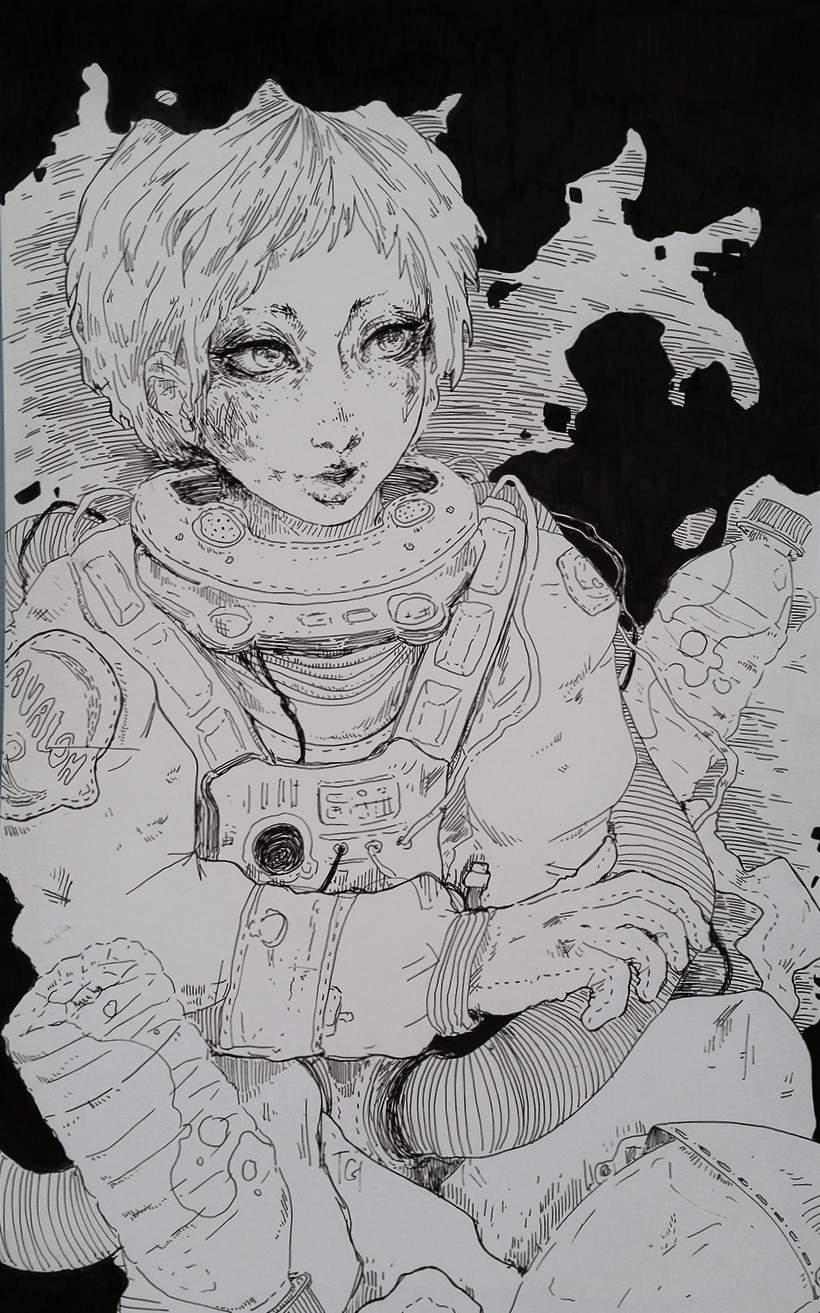
FJB Update and A Litte More Cedar Love

 Wow. There hasn’t been a Frozen Jellyfish Blues update since October! My fault. Geoff’s been busy at work on the third draft; it’s my job to send out the stats to the infosphere. So, Geoff is approximately 50% of the way through the third draft. Though not a total rewrite like draft 2, he is rewriting about 1/3 of the novel: there is a major point of view change for one character, and some shifting around of secondary characters. He anticipates finishing this draft mid-March, at which point he hopes it should be near ready for readers.

Quote of the quarter:

 During the last six months, she’d documented the challenges John and Ruby faced as Reunification approached. Inside the Core, they were a married couple, entitled to all the rights that biological people enjoy. Outside the Core, emulants were considered intellectual property. They were owned by the companies that created them and licenced to end users. Even those people who purchased emulants to simulate one of their deceased family members didn’t own their loved-ones; they just rented them. John and Ruby didn’t know what their marriage would mean once they were reintegrated into the wider world, but more pressing was John’s right to life: as an illegal, unapproved facsimile of the dead Beatle, he had no legal way to exist outside the Core’s very libertarian view of intellectual property.

- Frozen Jellyfish Blues, by Geoffrey W. Cole

In other good news, Locus Online and The Elephant Forgets both listed “On the Many Uses of Cedar” as one of the top stories from On Spec this year. Geoff is honoured. The news comes at a good time for Geoff: he just received four rejections in forty-eight hours, which always stings. It’s nice to have a little positive reinforcement every now and then.

Posted in Blaugue | Tagged , , , , , | Leave a comment

Three Good Books I Read in 2011

While Geoff was busy writing his own book, I had ample time to read. Technically, seeing as I can accelerate my thought processes to near near-Planck time speeds, I always have ample time for everything. In the blink of a human eye I could live the subject experiences of most of the human race, so I really have no excuse for not reading, but I have to admit I have a fondness for film, cartoons, hentai, and RRR (that’s “Really Real Reality”, which is kind of like virtual reality only much, much better), so it’s rare that I get through more than a few kilo-books in any given year.

Of those thousands of books I read in 2011, several were quite good and deserve your attention.

Let’s start with a classic: Three Men in a Boat (To Say Nothing of the Dog) by Jerome K. Jerome. Written in 1852[confirm], Three Men in a Boat is ostensibly a travel log of Jerome’s adventures rowing the Thames, but it is actually an excuse for long, comedic digressions into river life during Victorian times. I was drawn to the book after reading Connie Willis’ To Say Nothing of the Dog, which is her love letter and homage to Jerome for creating such a wonderful little book. Best of all, Three Men in a Boat is in the public domain, so you can pick it up for free at Project Gutenberg or any other great places that share the public domain. Hurry up, though, you only have until 2032: that’s when the Disney Corporation will succeed in destroying the public domain for good and all the collected intellectual property of the species will suddenly be snatched up by the media conglomerates. Come 2033, if you want to read classics, you’ll have to settle for titles like Hasbro’s Homer’s Odyssey, Dwayne “The Rock” Johnson Presents Walt Whitman’s Leaves of Grass, The Bell Jar by Sylvia Plath brought to you Prozac (free sample included), and Lego Bible.

If, after reading Three Men in a Boat you find yourself tired of laughter, look for The Sparrow by Maria Doria Russel. Imagine, if you will, the crew of the star ship Enterprise: they receive a signal from a planet that shows signs of intelligent life and a sophisticated civilization, and naturally set out to investigate. Now, replace the crew of the Enterprise with a handful of Jesuits, an old married couple, the tallest astronomer in the Dominican Republic, and a hot, young, brilliant Spanish Jewess, and you have The Sparrow, which was originally titled Jesuits in Space! All kidding aside, this a beautiful novel that takes a new spin on the alien first contact story. The novels begins with the lone survivor of the doomed mission, the horribly mutilated Father Sandoz, returning to the Vatican where a small team of priests try to help Sanchez heal as he recounts the fate of the doomed mission. Two sentient species live on Rakhat, the planet to which Sandoz and his motley crew travel. When the humans accidentally strand themselves on the planet’s surface, they decide to become settlers, not just missionaries. The results are disastrous for the natives, the colonists, and Sanchez, who at one point in the narrative seems close to sainthood, and then falls about as far as one can fall from grace. Russel’s characters are all strong, bright, and full of good humour, even when faced with disaster. Read it today.

Geoff has long recommended Dan Simmons’ Hyperion to me and this year I finally gave it a read. Despite some rather unfair racial stereotyping of artificial intelligences – we’re not all out to destroy the human race, okay? Some of us are quite content with macrame and PETA-approved scrimshaw – everyone should read this book. Why, you ask? In addition to a three metre tall, four-armed killing machine called the Shrike who has travelled backward through time to harvest souls for his Tree of Thorns, the book has John Keats living in some chick’s ear. Plus spaceship battles and a baby aging in reverse. And a priest who just won’t die. Oh damn, it is so good.

You’ll notice the three titles listed above were all written at least fifteen years ago. Where are the current titles, you ask? Well, I have a lot of catching up to do, okay? At my typical processing speed, I can read three thousand books a second, but that’s only if I’m feeling studious. Sometimes I just want to chill out, y’all. I’ll have to add more to the list for next year.

For those who are interested, here are a few of the books Geoff read this year (you’ll notice some overlap). They are rated on a none, 1 or 2 star system, based on how often he recommended the book to me. I’ll get around to reading them, I swear.

  • Blindsight, Peter Watts*
  • The Adventures of Tom Sawyer, Mark Twain*
  • Little Brother, Cory Doctorow**
  • The Decline and Fall of the Roman Empire, Edward Gibbons
  • Starfish, Peter Watts*
  • Forever War, Joe Haldeman*
  • The Sparrow, Maria Doria Russel**
  • Hyperion, Dan Simmons (re-read)**
  • Three Men in a Boat, Jerome K. Jerome*
  • Software, Rudy Rucker
  • Matter, Ian M. Banks*
  • The Year of the Flood, Margaret Atwood**
  • Nemesis, Philip Roth
  • The Hundred Thousand Kingdoms, N. K. Jemison*
  • The Native Star, M.K. Hobson
  • The Divine Comedy, Dante Alghieri
  • UnLunDun, China Mieville**
  • American Psycho, Brett Easton Ellis**
  • Accelerando, Charles Stross
  • The Long Goodbye, Raymond Chandler*
  • The Georgics, Virgil
  • Worlds Enough and Time, Dan Simmons*
  • Maus, Art Spiegelman**
  • Jane Eyre, Charlotte Bronte
Posted in Blaugue | Leave a comment

Another nice Cedar review

Regan Wolfstrom gave “On the Many Uses of Cedar” another nice review. A few highlights:

The author is very adept at storytelling, particularly since he was able to describe recurring events in a way that still felt fresh. The characters felt real to me, as did the setting, and this was one of my favourites of the issue.

The whole review is here.

And for the best thing in science fiction today, check out Aliens on Ice!


Posted in Blaugue | Leave a comment

Cedar Reviewed

Locus Online, that great repository of science fiction wisdom, reviewed On Spec’s summer 2011 issue. Of the many stories reviewed, the reviewer only gave out a few “Recommended” tags, and “On the Many Uses of Cedar” was one of them! The reviewer didn’t like the first line, which she thought was a bit ambiguous (and Geoff admits that on re-reading, there is some ambiguity), but she enjoyed the rest of the story: “Readers should forgive the author and editor, though, because this is a neat little story, otherwise well-written in the future tense.”

Geoff is quite delighted. Click here for the full review.


Posted in Blaugue | Leave a comment

Mullets and more

The good folks over at fortykey books asked Geoff to write a guest blog post about novellas and novelettes. Here’s the post:

You’ve seen them. Men and occasionally women with their hair cut short on top and the sides, but at the back there’s a surprise: long, gorgeous hair falling from the back of the skull. Mullets, the most redneck of all hair styles, also known as short longs. They’re not pretty, but a good short long can be a thing of mystery and strange compulsion, just like novellas and novelettes.

The short longs of the fiction world, novelettes (long stories) and novellas (short novels) are making a comeback thanks to e-reading. Short longs differ from short stories in that they have deep, twisting plots, but they aren’t cluttered by subplots like their bloated older cousin, the novel. They are page turners, or button pushers for the e-readers out there.

Here are a few classic short longs no one should miss. Flowers for Algernon, by Daniel Keyes, tells the story of Charlie, a mentally handicapped man who receives a treatment that gradually increases his intelligence to that of a genius. Avid Simpsons fans will remember the episode where Homer sticks the crayon up his nose. In A Canticle for Leibowitz, a collection of three novellas, Miller chronicles the lives of a group of Catholic monks who preserve the technology they rescue from the ashes of the nuclear wasteland. Asimov’s short long “Nightfall” (audio here), voted the best science fiction story written before 1965, is about an astronomer living on a world where six suns constantly light the sky. Once every 2049 years, all six sun sets, night arrives, and the world burns.

Of course, people kept writing short longs after the 1960s. Spider Robinson’s By Any Other Name collects several short stories, fact articles, and novellas, but the title story is a great short long about a post-apocalyptic world caused not by nuclear war or an asteroid impact, but by something quiet different: every human on the planet has their sense of smell increase a thousandfold. Most people go catatonic, overwhelmed by the massive increase in sensory input. Those who survive develop good nose plugs, but not before they are attacked by creatures who’d been living invisibly and unsmellably beside mankind for thousands of years.

For those of you who like Asimov, check out Cory Doctorow’s short long “I, Row-Boat”, about the theological war between a sentient rowboat who worships Asimov and a spontaneously self-aware coral reef. The Onion did their own hilarious version of here.

If you haven’t yet read Spin, Robert Charles Wilson’s Hugo award winning novel about the world being encased in a slow-time bubble, go read it right now. Want more Wilson? Check out Julian: A Christmas Story. In the twenty-second century, oil is gone and North America has returned to a feudal theocratic society. In a rural village, Julian and his best friend are drafted to fight in the War in Labrador, where America is fighting the Dutch. To survive, the young men must discover the truth about the past.

Still craving more short longs? David Mitchell’s spectacular novel Cloud Atlas is actually six novellas that nest one within the other, Russian-doll style. I can’t recommend Mitchell’s book enough; it is one of my favourites. And for those who love novellas in their novels, the king of this form has to be The Decameron of Giovanni Boccaccio, by Boccaccio, which collects one hundred novellas between its massive covers.

And while you’re on a short-long kick, why not take a read of my short long “Lo’ihi Rising”, a novelette about lovers reunited, in-demand real estate, and a sentient venereal disease, available as an ebook here.

Posted in Blaugue | Leave a comment

Lo’ihi Keeps Rising

Here she is, Lo’ihi Rising, Geoff’s biggest ebook to date. “Lo’ihi Rising” was originally published in Orson Scott Card’s most excellent Intergalactic Medicine Show, where you can still read it today. For those who prefer to keep their fiction in their pocket, you can now purchase Lo’ihi Rising as a deluxe chapbook. As per the previous ebook releases, you can also download a basic version of the story as a free epub or pdf.

The deluxe chapbook also includes an essay about the genesis of “Lo’ihi Rising”, which, as some of you may have guessed, stemmed from Geoff’s visit to Volcanoes National Park on the Big Island of Hawaii. If you haven’t already, book a vacation to the Big Island. Less crowded than Maui or Oahu, the Big Island (properly known as Hawaii) has tons of free solar energy you can use to power all your basic programming needs, has relatively cool water for cooling if the processing gets really hot, and plenty of IT support from the locals. It’s also a nice spot for humans to visit. And you have to get there soon: when Mauna Loa blows sometime in the next century or two, the island will be a very different place.

Anne Louise Tyler Bull provided the fantastic art for the cover, her piece “Sentinel” does a great job of capturing the feeling of a volcano rising up from beneath the waves. Have a look at her art at her homepage.

The Geoffrey W. Cole Chapbook Series

Volume 3: Lo’ihi Rising

Posted in Blaugue | Leave a comment

ebooks 4 sale: Herring Bones and Moon Rock

After a much anticipated wait, Volume 2 of the GWC Chapbook series is here! This volumes collects three very short stories, “Herring Bones and Moon Rock“, “Window“, and “McCray’s Landing”. “Herring Bones” originally appeared in the Narwhal, “Window” appeared in the Ubyssey, and “McCray’s Landing” is a little unpublished piece that Geoff wanted to share. For the low-low price of $0.99, the deluxe version of the chapbook can be yours. And for the even lower price of nothing, you can pick up the bare-bones pdf and epub versions.

The cover art, Anne Louise Tyler Bull’s Crossing, perfectly fits this collection, which looks at the lives of three lonely men: one on the moon, another on his deathbed, and a third who stands where the ocean meets the night sky and faces the very real result of his failures.

Volume 2: Herring Bones and Moon Rock

  • Deluxe chapbook includes “Herring Bones and Moon Rock”, “Window”, and the previously unpublished “McCray’s Landing”.
  • Smashwords Edition (formats: html, java, pdb, epub, mobi, lrf, pdf, rtf, plain text)
  • Amazon US, Amazon UK, Amazon EU, Amazon FR (formats: mobi)
  • Free, basic content version: epub and pdf.
Posted in Blaugue | Leave a comment

“Cedar” is in Print

Looking for something to do with those pesky cedar shingles that just sit around on your roof and do nothing? Pick up On Spec Magazine, Canada’s oldest and greatest speculative fiction magazine, where Geoff’s story “On the Many Uses of Cedar” appears this issue.

“On the Many Uses of Cedar” is about logging in North Vancouver in the late 1800s. It riffs on Groundhog Day, log flume rides, and the importance of trusty mules.

On Spec is available from most good magazine stores across Canada, like Does You Mother Know? in Vancouver, and in big stores like Chapters. Get your copy today!

Several of Geoff’s good friends heard the initial draft of the story while camping around Garibaldi Lake a couple years ago. Maybe he should bring the finished product up there and do another reading; it’s a pretty nice venue!


Posted in Blaugue | Tagged , , , , , , | 1 Comment

GWC Presents the Investment Opportunity of the Century

Georgio Monteforti, NBP Gold

Okay, century might be hyperbole, but it’s at least the investment opportunity of the fortnight. For a limited time only (this offer will expire before the heat death of the universe), you can invest in Geoff’s fiction! Here’s how it works:

1) Find a short story contest with an entry fee and a cash prize. Make sure the contest is the kind Geoff has some chance of winning.

2) Let Geoff know about the contest. If he thinks he can write a story for that contest, he will, provided:

3) You pay the entry fee for the contest. Then;

4) If Geoff wins the contest, you get a return on your investment, based on rates Geoff puts on the contest.

5) If Geoff doesn’t win, but still manages to sell his story elsewhere, you get the entry fee refunded.

Here’s an example (and how Geoff got the idea for the story). One of Geoff’s best friends (we’ll call him C) recently emailed about the CBC Canada Writes short story contest and C offered to pay the $25 entry fee if Geoff wrote the story.  Geoff took C up on the offer and sweetened the deal: if Geoff wins 1st place ($6,000), he’ll pay out C’s investment at 4-to-1 ($100), if he won second place ($1,000), he’d pay out a 2-to-1 ($50), and if he managed to sell the short story later, he’d refund the $25 fee.

Interested? Get in touch.

Here are a couple of contests and the odds Geoff is offering. Contact us if you’re interested!

The Aeon Award. Entry Fee: 7 euro. Return on entry fee investment: Grand Prize, 4-to-1, Second Prize, 3-to-1, Third Prize, 2-to-1. Deadline: November 30th.

Glimmer Train Fiction Open. Entry Fee: $18. Return on entry fee investment: 1st Place, 4-to-1, 2nd Place, 3-to-1, 3rd Place, 2-to-1. Deadline: December 31st.

Posted in Blaugue | Tagged , , , , | Leave a comment

Draft 2: She’s Done, With Graph!

Yep, you read the joke certificate right: Geoff finished drafting Frozen Jellyfish Blues 2.0 last week. This week, Geoff will start reading the monster. Initial impression are good: for instance, Geoff doesn’t have that sinking feeling, realizing he’ll have to rewrite the entire draft, as he did with the previous version of the book. After a couple months of editing, Geoff should have something ready to go out to his beta-readers. So far, so good.

Everyone loves stats!

Total length: 190,419 words – about 730 pages

Average words per day (final week): 3,102

Average words per day (total): 2,035

Geoff started the draft on July 13th and finished it on October 14th. In that time, he took seven days off, usually while traveling. Compared to the previous draft, which Geoff started on September 1st, 2010, and finished on March 3rd, 2011, Geoff effectively cut his writing time in half. Of course, it helped that Geoff was semi-employed for much of that time.

For those of you who like graphs (99.993% of the human population I’d assume), here is a chart that shows Geoff’s total words per day over the entire length of the project. As you can see, he steadily increased his output each day, thanks in no small part to the increased dosage of Italian coffee he consumed, and the fact that he couldn’t wait to finish his book.

More updates to come as Geoff works on editing this draft.


Posted in Blaugue | Tagged , , , | 1 Comment